Winter Driving Tips for Snow, Ice, and the First Cold Morning
Check the route and clear your car before driving in snow. Learn how to manage speed, space, visibility and winter supplies.
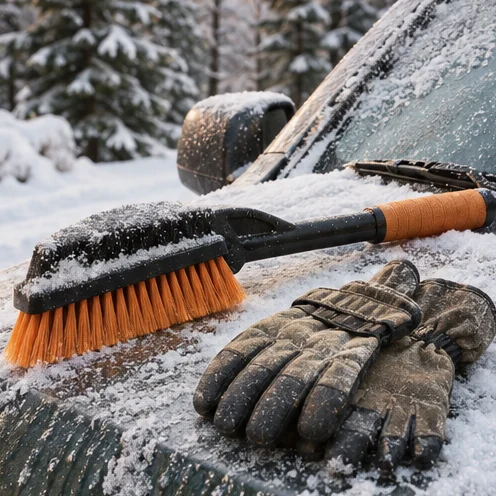
Winter driving starts with a decision about whether to leave. Check the forecast and road reports for the whole route, postpone if officials discourage travel, and clear the car completely before moving. Once underway, slow down, leave more space and keep your steering, acceleration and braking smooth. A windshield that looks clear through one small patch is still an unfinished job.
Decide before you load the car
Check conditions on the highest part of the route and at your expected arrival time, not just at your driveway. A mountain pass can be much colder than the nearest city. Look for closures, traction-control requirements and a forecast that worsens before your return. If the route has a closure or travel advisory, build your day around staying put instead of hunting for a local bypass. Tell somebody your route and when you expect to check in.
Give yourself time to clear the whole vehicle
Defrost the windshield, then brush snow off the roof, lights, mirrors, windows and registration plates. Clear the camera and sensor areas identified in the owner’s manual. Snow left on the roof can slide toward the windshield when you brake. Start the vehicle outdoors and verify that the tailpipe is clear. Use winter-rated washer fluid that suits local temperatures and start a long drive with enough fuel or charge to account for delays.
Leave room to change your mind
Build a larger space in front of you so you can slow well before a turn, hill or crowded exit. Avoid cruise control on slippery surfaces. Give snowplows room and expect the surface ahead of them to be worse than the surface behind them. If the weather gets beyond what you or the vehicle can manage, look for the next safe place to stop or turn back. An all-wheel-drive badge does not shorten a vehicle’s braking distance on ice.
Keep winter gear reachable
Keep a scraper, warm gloves and the owner’s manual where you can reach them before unloading a full trunk. Put blankets and a headlamp in the cabin or a restrained bag. A packed car still needs clear sight lines. At a hotel or rest stop, take your phone and cabin essentials with you instead of leaving them in a vehicle that will be cold when you come back.
Frequently asked questions
Should I warm up the engine in the garage?
Never run a vehicle inside a closed garage. Make sure the tailpipe is clear any time you are stationary in snow and using the engine for heat.
What if heavy snow starts while I’m driving?
Follow official instructions and look for an open exit, service area or other safe stopping place. Send an update once parked. A slower arrival is preferable to continuing when you can no longer see the roadway clearly.
Reference: NHTSA winter driving guidance