How to Pack a Car for a Road Trip
Load heavy items low, check rated capacity, and keep bags accessible without blocking seat belts or visibility.
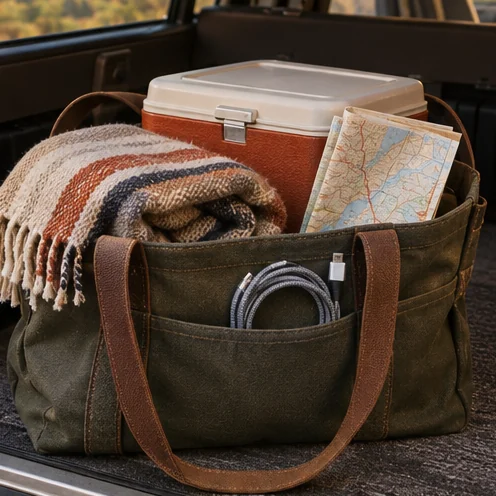
Load the heaviest gear low and put it as far forward in the cargo area as your vehicle’s manual permits. Secure items so they can’t move, and keep the door, seat belts, mirrors, and emergency gear usable. If the car feels full before the bags are in, check weight and dimensions before buying a roof box or stacking anything higher.
Work out the load you can carry
Locate the loading label on the driver’s door or door jamb and read the manual for your vehicle. The combined occupant-and-cargo figure includes the people, luggage, and other loads that count against the vehicle’s capacity. Consult the manual for accessory and towing limits if those apply. As a simple bookkeeping example, a 900-pound combined limit minus 560 pounds of passengers leaves 340 pounds for cargo and other applicable load. Individual axle and accessory ratings still apply. Federal vehicle loading label standard
Load in this order
- Set the seating first. Install child seats as directed by the seat and vehicle manufacturers. Test every seat belt before closing off the footwells or moving any seat.
- Place the dense things. Coolers, cases of water and heavy luggage belong low and should be secured at approved points. Don’t use a child-seat tether point for cargo unless the manual explicitly permits it.
- Fill gaps with soft items. Put jackets or a light duffel in gaps without building a wall behind the occupants. A cargo cover can conceal luggage but isn’t a restraint by itself.
- Put a day bag where it’s useful. Slot the bag near the hatch if you’ll open it from outside. Keep it low and secured. Refill it during stops instead of digging through boxes in motion.
- Recheck once loaded. Tug on the restrained gear and check mirrors and driver sightlines. Make sure all doors and the hatch latch fully. Check external cargo again after the first safe stop. NHTSA secure-your-load guidance
A smaller organizer can separate frequently used gear from bulkier luggage. Pair it with attachment points allowed by your vehicle and make sure the organizer itself can’t slide.
FAQ
Should a cooler go in the back seat or cargo area? Choose the low, secure spot your vehicle manufacturer allows. A cargo area usually leaves better access to seat belts and footwells. Get drinks when you’re parked.
How do I save room without adding a roof load? Replace hard cases with soft bags where practical, remove items you’ll never need, or book lodging with towels and laundry. If the car still exceeds a limit, lighten the load or use a vehicle with enough rated capacity.